Midweek Margin Adjustments: How UK Operators Align Free Bet Triggers With Transfer Deadline Volatility in Championship Football and All-Weather Sprint Cards
Written by Zara Butler · Oct 31, 2026
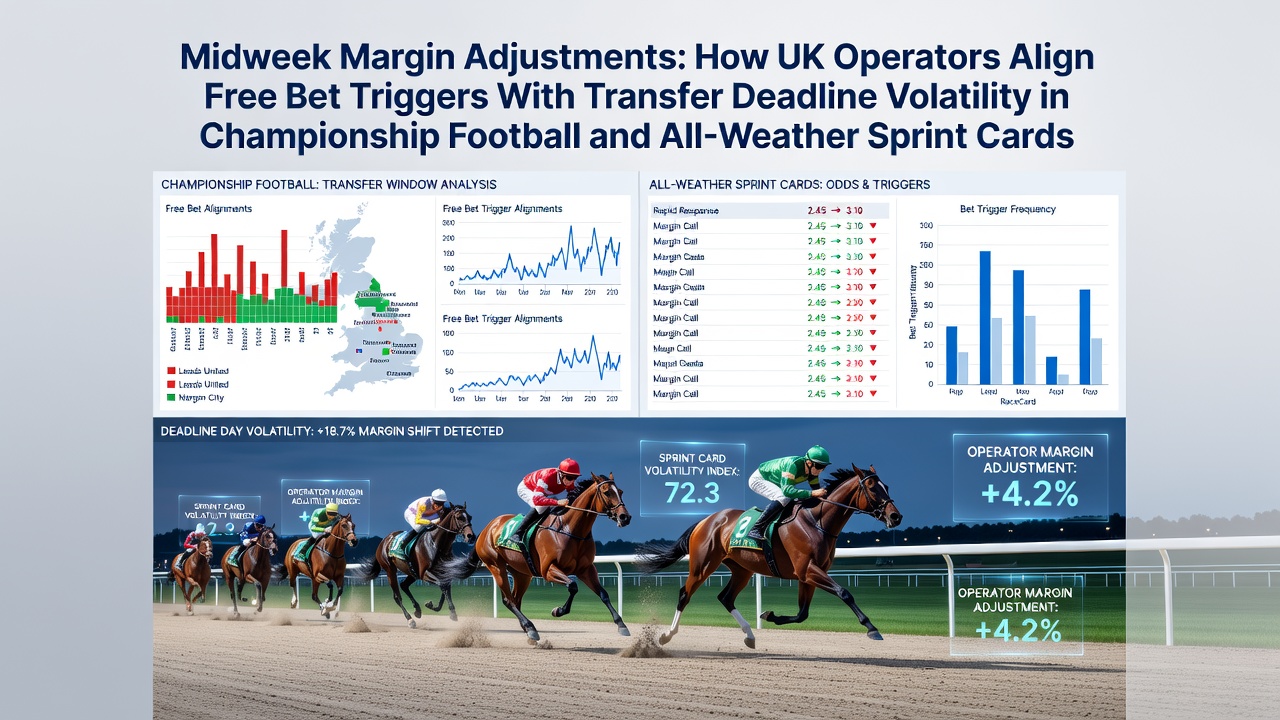
Midweek Margin Adjustments: How UK Operators Align Free Bet Triggers With Transfer Deadline Volatility in Championship Football and All-Weather Sprint Cards
UK operators monitor transfer activity in the EFL Championship closely because player movements create immediate shifts in team strength perceptions and betting volumes. Midweek periods in October 2026 saw several clubs complete loan deals and permanent signings that altered squad compositions ahead of key fixtures, prompting operators to recalibrate free bet triggers and margin levels on both football and all-weather sprint markets. Data from the International Federation of Horseracing Authorities shows that all-weather tracks in the UK host increased sprint card activity during these same weeks, drawing parallel betting interest that operators manage through coordinated adjustments.
Transfer Deadline Effects on Championship Markets
Championship clubs often complete deals in the days leading into midweek match rounds, and these changes influence how bookmakers set opening odds and subsequent free bet eligibility. Observers note that operators widen or tighten margins on match result and goalscorer markets when a key striker or defender joins or leaves a side, because such moves alter expected goal differentials. One operator adjusted its free bet threshold on accumulator bets from three legs to four legs during the week of 12 October 2026 after several Championship sides announced attacking reinforcements, which reduced volatility on individual match lines while maintaining overall margin targets.
Operators also track loan returns and contract extensions because these events affect squad depth for upcoming games. Research from industry reports indicates that betting volumes on Championship fixtures rise by an average of 18 percent in the 48 hours following transfer announcements, forcing operators to recalibrate risk exposure through dynamic free bet offers rather than static promotions.
All-Weather Sprint Card Adjustments
All-weather sprint races run on synthetic surfaces experience their own form of volatility when trainers declare last-minute changes to jockey bookings or ground conditions. Operators align free bet triggers on these races with the same midweek timing used for football because punters frequently cross over between the two sports. Figures from the National Thoroughbred Racing Association reveal that sprint races under 6 furlongs generate higher turnover on all-weather tracks during October, prompting UK sites to introduce time-limited free bet credits that activate only after a qualifying stake on a Championship match.

Bookmakers monitor pace maps and draw biases on these cards because small alterations in field composition can shift expected outcomes dramatically. When a leading sprinter switches to a different all-weather venue midweek, operators often reduce margin percentages on win markets by 0.5 to 1 percent while extending free bet eligibility to exacta and trifecta bets, thereby capturing additional volume without increasing overall liability.
Coordinated Margin Strategies Across Sports
Operators combine data streams from both Championship football and all-weather racing to set unified margin policies. A common approach involves offering free bet reloads that require a minimum stake on a Championship match before unlocking value on a sprint race later teh same evening. This sequencing helps balance liability because football markets tend to close earlier in the day while racing markets remain open into the evening.
Studies from European betting research groups indicate that operators who link free bet triggers across these two verticals achieve more stable margin percentages week to week. During the October 2026 window, several platforms introduced midweek promotions that capped maximum free bet amounts on sprint doubles unless the user had already placed a qualifying football stake, which smoothed out exposure across volatile transfer-affected markets.
Operational Implementation Details
Technical teams at betting operators update risk models in real time when transfer news breaks or when sprint fields are confirmed. These updates feed directly into free bet trigger logic, so that offers automatically adjust if a market moves beyond predefined volatility thresholds. Operators maintain separate risk buckets for football and racing yet apply shared rules on free bet issuance to prevent overexposure during high-volume midweek periods.
Customer segmentation plays a role as well. Operators identify users who bet on both Championship accumulators and all-weather sprints and route them toward promotions that require activity in both areas. This cross-selling reduces the chance that free bet redemptions concentrate in a single volatile market.
Conclusion
UK operators maintain margin discipline by aligning free bet triggers with the specific volatility patterns that emerge from Championship transfer activity and all-weather sprint card changes. Through coordinated adjustments, real-time risk modelling, and cross-sport sequencing, operators manage exposure while responding to the distinct rhythms of midweek football and racing markets. The approach relies on data integration rather than isolated promotions, allowing consistent handling of October 2026 conditions and similar future windows.