Retention Programs Driving Sustained Activity in Mid-Tier Soccer Leagues and Steeplechase Circuits
Written by David Hansen · Aug 26, 2026

Retention Programs Driving Sustained Activity in Mid-Tier Soccer Leagues and Steeplechase Circuits
Retention programs have become central to maintaining consistent participation across mid-tier soccer leagues and steeplechase racing circuits, where operators implement structured incentives that encourage repeated involvement from athletes, teams, and support staff. These initiatives combine financial rewards, professional development opportunities, and performance tracking systems that extend engagement beyond single events or seasons. Data from industry reports indicate that such programs correlate with higher retention rates in leagues operating outside top divisions, including those in regional European competitions and North American circuits.
Core Components of Retention Strategies
Organizations structure these programs around tiered rewards that scale with sustained activity, offering bonuses for meeting participation thresholds in training regimens or race schedules. In soccer contexts, mid-tier clubs often tie player contracts to appearance minimums across multiple campaigns, while steeplechase circuits use similar mechanisms for jockeys and trainers who commit to full seasons. Researchers at the Australian Institute of Sport have documented how integrated tracking platforms help participants monitor progress, leading to improved continuity in both sports.
Community integration forms another pillar, with programs incorporating local outreach that connects athletes to fan bases and regional events. This approach sustains interest during off-peak periods, such as summer breaks before August 2026 fixtures begin in various leagues. Observers note that clubs and racing bodies frequently partner with educational providers to deliver skill workshops, which studies link to lower dropout rates among emerging talents.
Impact on Soccer Leagues
Mid-tier soccer operations report measurable gains when retention frameworks address both on-field and off-field factors. Leagues in secondary divisions across Europe and Asia have adopted points-based systems that reward consistent squad availability, reducing mid-season turnover. According to findings published by the International Olympic Committee’s sports development division, these measures contribute to steadier attendance figures and more predictable fixture planning. Teams that embed mentorship pairings within their retention models see longer tenures for young professionals transitioning from academy ranks.
Performance analytics play a supporting role, supplying data that allows coaches to identify at-risk participants early and deploy targeted interventions. This method has proven effective in maintaining activity levels through congested calendars that stretch into late summer periods.
Application in Steeplechase Circuits
Steeplechase events rely on retention programs that account for the physical demands of jumps racing, including recovery protocols and career longevity planning. Circuits in Australia and parts of North America have introduced loyalty structures that accumulate credits for riders completing multiple meets, which can convert into equipment grants or veterinary support for associated stables. Evidence from the Jockey Club of Canada highlights how these arrangements stabilize participant numbers across seasonal transitions.
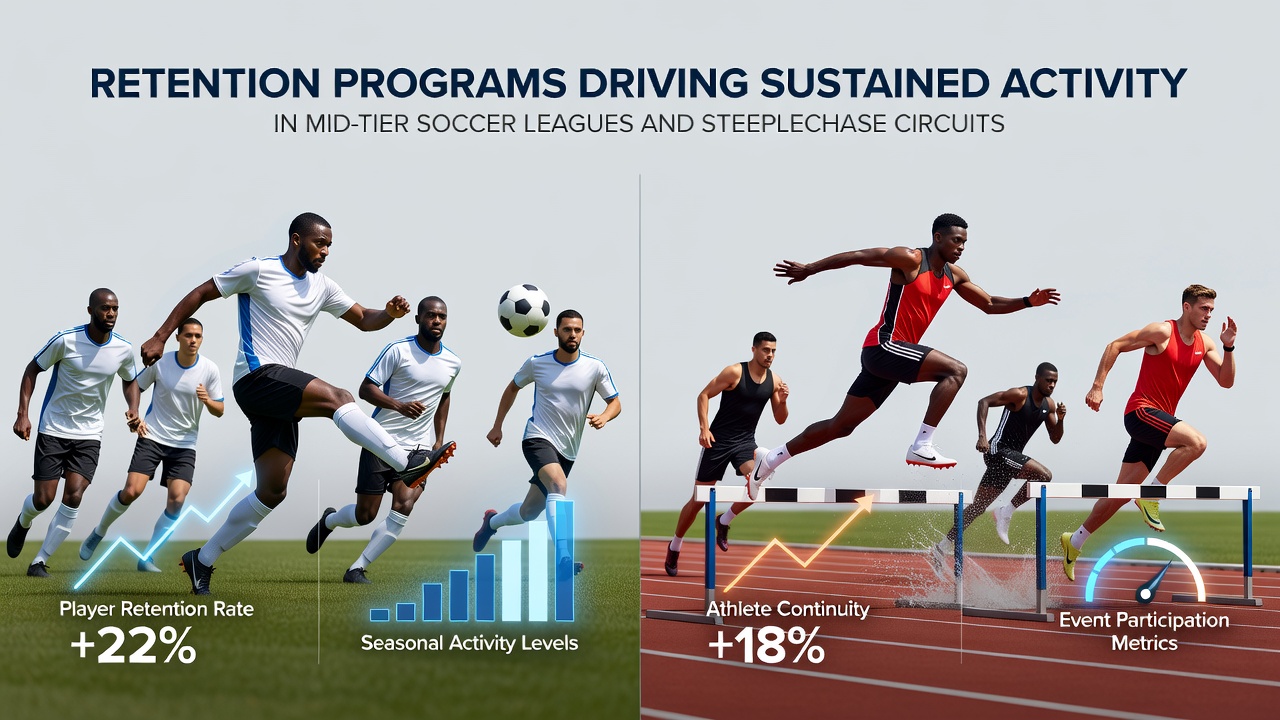
Season-long commitments receive particular emphasis, with bonuses tied to completing full circuits rather than isolated starts. Trainers benefit from similar structures that reward horse welfare compliance, fostering environments where sustained involvement becomes the norm. Data compiled by the European Horseracing Scientific Advisory Board shows these incentives align with broader patterns of reduced injury-related absences when support services accompany the financial elements.
Comparative Outcomes Across Regions
Regional variations reveal how cultural and regulatory contexts shape program design. North American mid-tier soccer entities emphasize scholarship linkages, whereas Australian steeplechase organizers focus on travel subsidies for remote competitors. Both approaches demonstrate comparable success in extending active periods, according to cross-study analyses conducted by university sports management departments. August 2026 schedules are already incorporating preliminary retention milestones that carry forward into subsequent years.
Technology integration further unifies these efforts, with mobile platforms enabling real-time updates on progress toward retention targets. Participants across both sports gain visibility into accumulated benefits, which reinforces ongoing commitment without requiring constant administrative oversight.
Conclusion
Retention programs continue to shape participation dynamics in mid-tier soccer leagues and steeplechase circuits through layered incentives and support structures. Their implementation reflects coordinated responses to the challenges of maintaining activity outside elite tiers, drawing on data from multiple governing bodies and research institutions. As calendars advance toward 2026 and beyond, these frameworks provide measurable pathways for consistent engagement across diverse geographic settings.